
By: Chris Perkins, Senior Writer and Editor, GM News
Racing the Indianapolis 500 and NASCAR Coca-Cola 600 on the same day, with Chevrolet power
2026-05-22
BY: Chris Perkins, Senior Writer and Editor, GM News
The Sunday before Memorial Day has long been a huge occasion for American motorsports. In the afternoon, you have the Indianapolis 500 in Indianapolis, IN, the premier U.S. open-wheel race and the country’s longest-running motorsport tradition. In the evening comes the Coca-Cola 600, nearly 600 miles away from Indy in Concord, NC, one of NASCAR’s marquee events. Being held in succession on the same day, these races have long created an intriguing opportunity for ambitious drivers: They call it “Double Duty,” racing both events back-to-back.
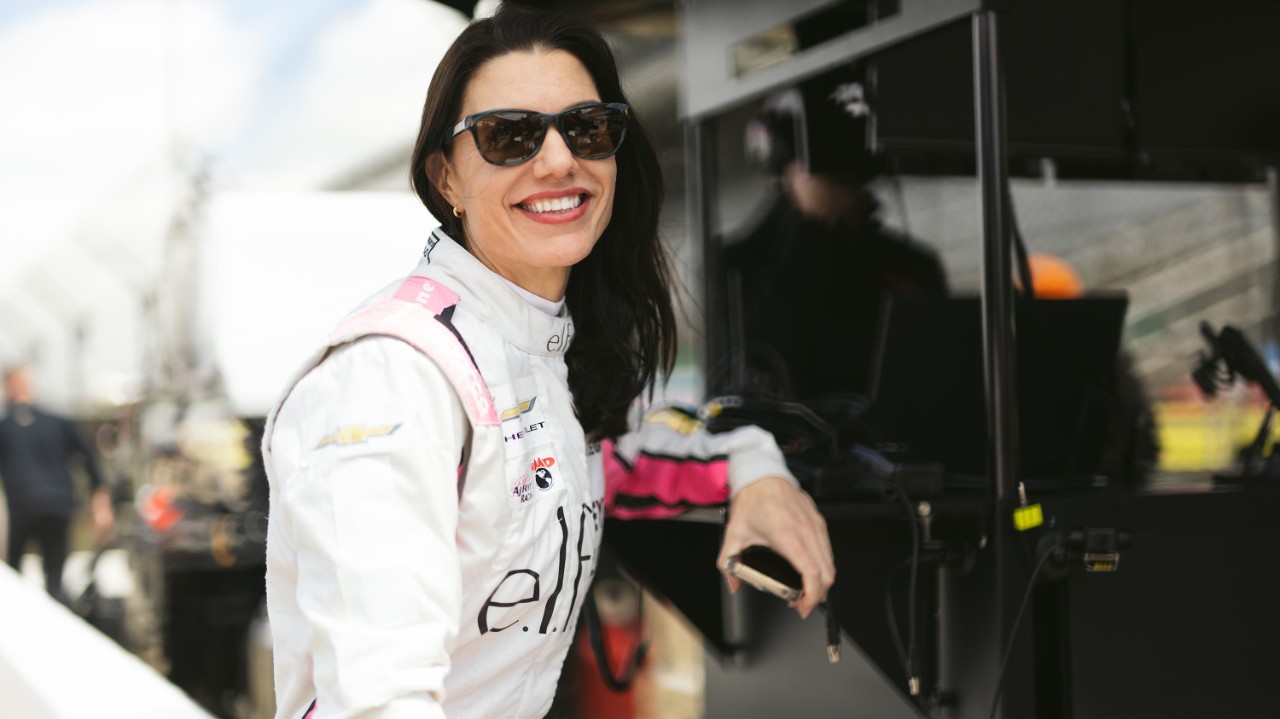
Only five drivers in history have attempted to run both the Indy 500 and Coca-Cola 600 on the same day. On Sunday, Katherine Legge will add her name to that list. The British-born professional driver will be the first woman and the first non-American to attempt the Indy 500 and Coca-Cola 600 in the same day, and she’ll attempt both with Chevrolet power.
Legge, who has raced just about everything on four wheels, will start Sunday, May 25th in Indianapolis. She’ll compete in the Indy 500 with HMD Motorsports with AJ Foyt Racing, then as soon as that race ends, she’ll take a helicopter to the airport and fly to Charlotte to get back behind the wheel, running the Coke 600 with Live Fast Motorsports. e.l.f. Cosmetics will serve as primary sponsor for both events.
While Legge has wanted to attempt “Double Duty” for years, it was only last week, in the midst of Indy 500 practice, when she learned she was approved to compete in both races on Sunday.
“One of the blessings with this is that I don’t have time to worry,” Legge tells GM News. “I’ve got really great teams behind me on both sides. So as long as I go where I’m told to go, eat what I’m told to eat, and follow their instructions, it should be a good weekend.”
Legge's primary aim is to simply complete all 1,100 miles of racing -- or as she puts it, 4,440 left turns – without issue. “I think we’ll have a strong car for Indy, and in NASCAR, we always seem to make the car better throughout the run,” she says. “Completing it all, not overdriving, and being mentally sharp are my priorities.”
Will Legge hold anything back at Indy for the sake of her second drive? Not a chance. “Anytime you’re on the racetrack, you’re giving it 110 percent,” she says. “There’s not any part of you as a race car driver that says, ‘I’m not going to push it hard.’ It’s not how we’re wired.”
Not only is Legge racing with great teams in INDYCAR and NASCAR, GM is the perfect automaker to work with for these races, as Chevrolet is the only automotive brand competing in both events.
“GM has been amazing to work with,” Legge says. “They’re a stalwart in American racing, and I’m very proud to represent them and be in their equipment.”
Legge has spent lots of time at GM’s motorsports headquarters in Charlotte, driving practice laps in GM’s cutting-edge virtual simulators to prepare for both events. She’s been impressed by the level of organization and the people who make up GM Motorsports. “They’re very dedicated to giving opportunities to those who deserve them,” Legge says.
While both the Indy 500 and Coca-Cola 600 take place on "oval” race tracks comprised of four left turns, they’re completely different events for the driver. An IndyCar is a lightweight, open-cockpit, open-wheel machine with a hybrid V-6 powertrain behind the driver and lots of aerodynamic downforce from large wings on the nose and tail of the car. A NASCAR Cup car, by comparison, is a much larger beast, with bodywork that more closely resembles the cars you see on the street and a screaming V-8 engine up front.
The average speed at last year’s Indy 500 was 168.9 mph, while at the Coca-Cola 600 it was a still-scintillating 135.8 mph. Regardless of speed, each race is a grueling challenge in its own way, demanding masterful technique and relentless strategy from both driver and crew. It seems like it would be hard to jump from an INDYCAR race to a NASCAR Cup event, but Legge says the biggest challenge is something you might not expect.
“The part that you have to think about consciously is things like pit stops and the rules around caution laps – what you have to do when you’re not out lapping on the track,” Legge says. “For me, driving the race car happens more instinctively.”
Being the first woman to attempt Double Duty, Legge feels some responsibility to young racers.
“I have always said that I just want to be the best racing driver I can be. Being female is irrelevant,” she says. “But I will say, I think it has relevance to the next generation. You never set out to be a role model or anything, but you know your position carries some responsibility, and it would be remiss of you not to realize that.”
GM has been an ideal partner in that regard. “They’re just putting the best driver in the car, or the best person in a particular role, regardless of what that person looks like,” Legge says. “It’s very refreshing.”
NOTE: Please embed any photos where you would like them embedded on GM News. If you have video to embed, please make a note where you would like it embedded and ping Steve Woznicki and/or Seth Hay to call this out.
The Sunday before Memorial Day has long been a huge occasion for American motorsports. In the afternoon, you have the Indianapolis 500 in Indianapolis, IN, the premier U.S. open-wheel race and the country’s longest-running motorsport tradition. In the evening comes the Coca-Cola 600, nearly 600 miles away from Indy in Concord, NC, one of NASCAR’s marquee events. Being held in succession on the same day, these races have long created an intriguing opportunity for ambitious drivers: They call it “The Double,” racing both events back-to-back.
Only five drivers in history have attempted to run both the Indy 500 and Coca-Cola 600 on the same day. On Sunday, Katherine Legge will add her name to that list. The British-born professional driver will be the first woman and the first non-American to attempt the Indy 500 and Coca-Cola 600 in the same day, and she’ll do both with Chevrolet power.
Legge, who has raced just about everything on four wheels, will start Sunday, May 25th in Indianapolis. She’ll compete in the Indy 500 with HMD Motorsports with AJ Foyt Racing, then as soon as that race ends, she’ll take a helicopter to the airport and fly to Charlotte to get back behind the wheel, running the Coke 600 with Live Fast Motorsports. Primary sponsorship for both events is provided by e.l.f. Cosmetics.
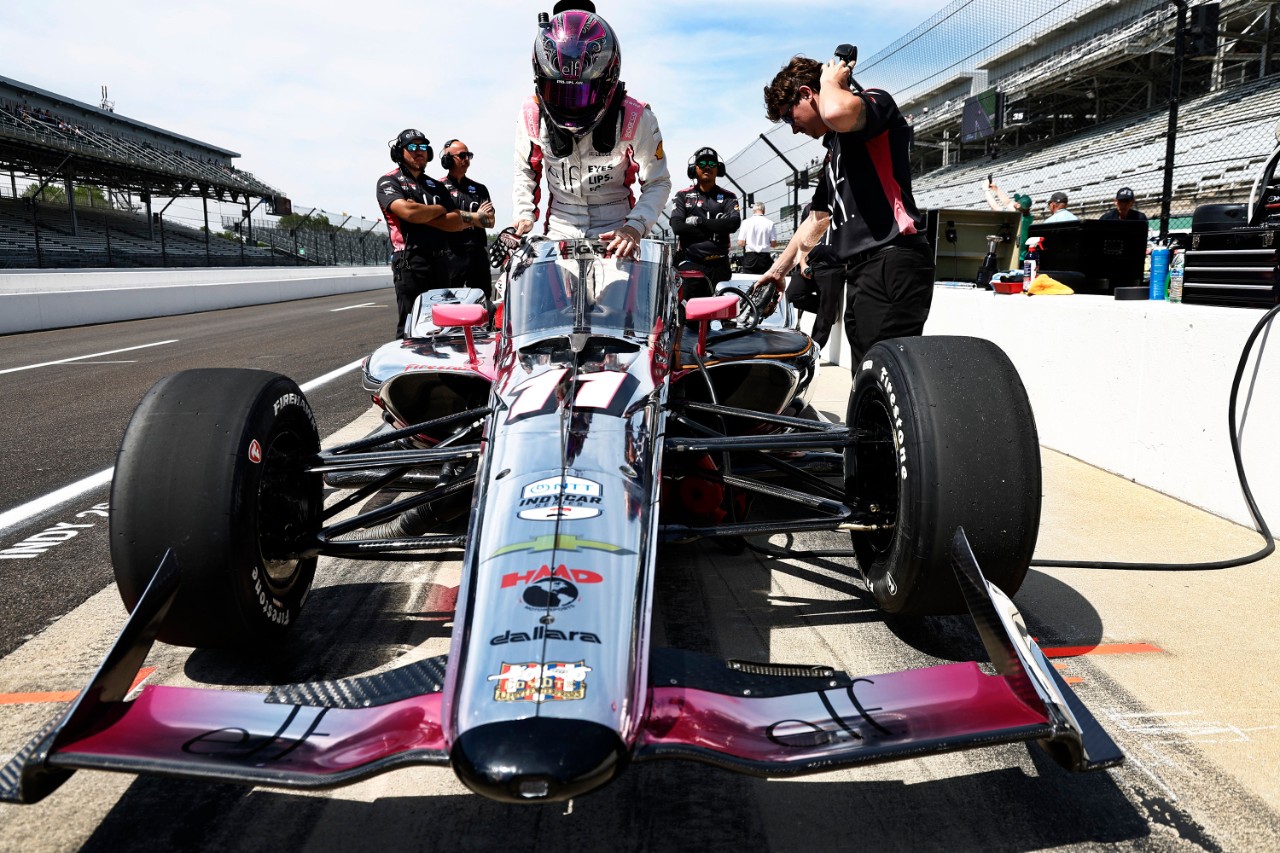
While Legge has wanted to attempt “The Double” for years, it was only last week, in the midst of Indy 500 practice, when she learned she was approved to compete in both races on Sunday.
“One of the blessings with this is that I don’t have time to worry,” Legge tells GM News. “I’ve got really great teams behind me on both sides. So as long as I go where I’m told to go, eat what I’m told to eat, and follow their instructions, it should be a good weekend.”
Legge's primary aim is to simply complete all 1,100 miles of racing – or as she puts it, 4,400 left turns – without issue. “I think we’ll have a strong car for Indy, and in NASCAR, we always seem to make the car better throughout the run,” she says. “Completing it all, not overdriving, and being mentally sharp are my priorities.”
Will Legge hold anything back at Indy for the sake of her second drive? Not a chance. “Any time you’re on the racetrack, you’re giving it 110 percent,” she says. “There’s not any part of you as a race car driver that says, ‘I’m not going to push it hard.’ It’s not how we’re wired.”
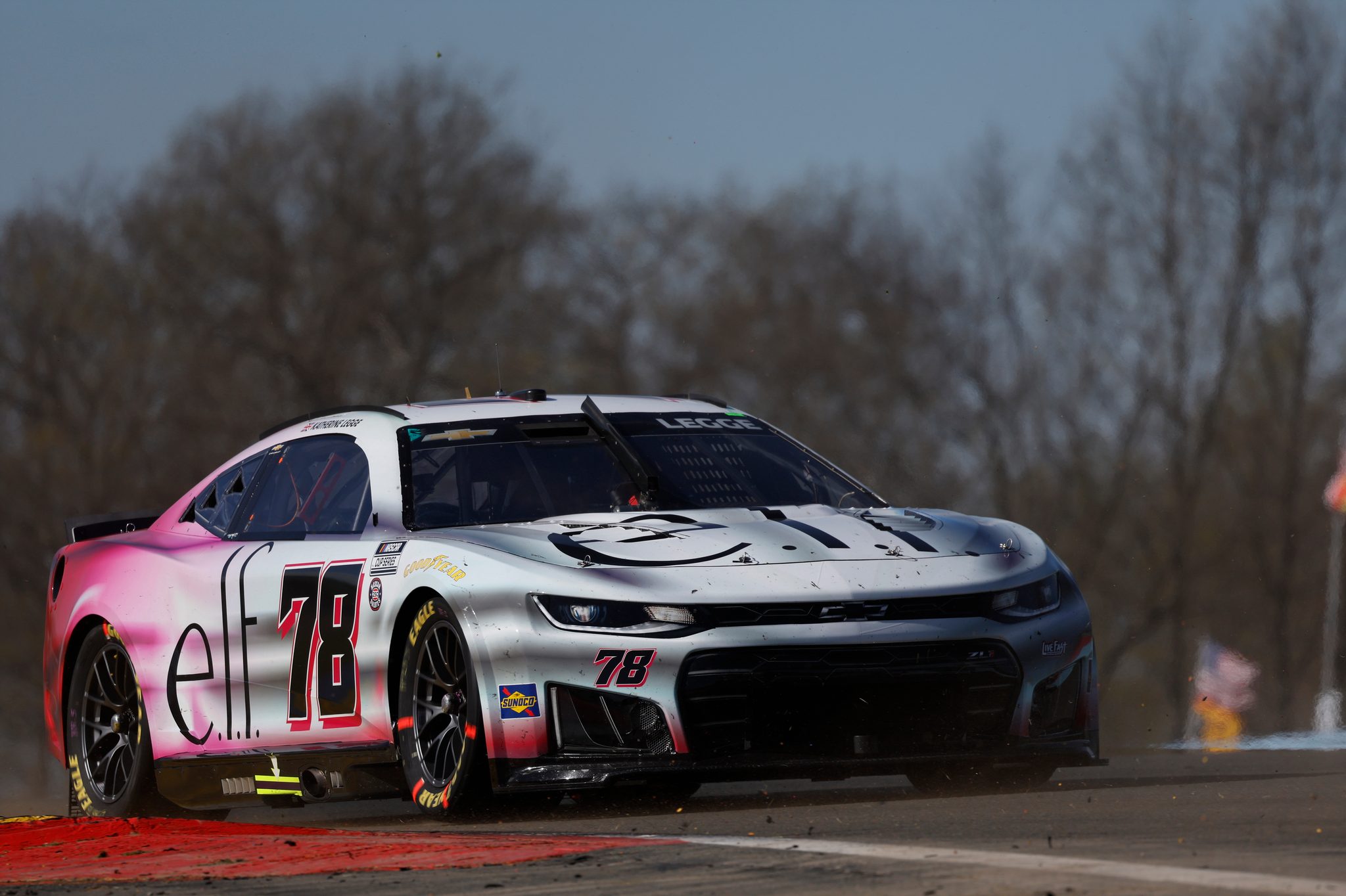
Not only is Legge racing with great teams in INDYCAR and NASCAR, GM is the perfect automaker to work with for these races, as Chevrolet is the only automotive brand competing in both events.
“GM has been amazing to work with,” Legge says. “They’re a stalwart in American racing, and I’m very proud to represent them and be in their equipment.”
Legge has spent lots of time at GM’s motorsports headquarters in Charlotte, driving practice laps in GM’s cutting-edge virtual simulators to prepare for both events. She’s been impressed by the level of organization and the people who make up GM Motorsports. “They’re very dedicated to giving opportunities to those who deserve them,” Legge says.
While both the Indy 500 and Coca-Cola 600 take place on "oval” race tracks comprised of four left turns, they’re completely different events for the driver. An IndyCar is a lightweight, open-cockpit, open-wheel machine with a hybrid V-6 powertrain behind the driver and lots of aerodynamic downforce from large wings on the nose and tail of the car. A NASCAR Cup car, by comparison, is a much larger beast, with bodywork that more closely resembles the cars you see on the street and a screaming V-8 engine up front.
The average speed at last year’s Indy 500 was 168.9 mph, while at the Coca-Cola 600 it was a still-scintillating 135.8 mph. Regardless of speed, each race is a grueling challenge in its own way, demanding masterful technique and relentless strategy from both driver and crew. It seems like it would be hard to jump from an INDYCAR race to a NASCAR Cup event, but Legge says the biggest challenge is something you might not expect.
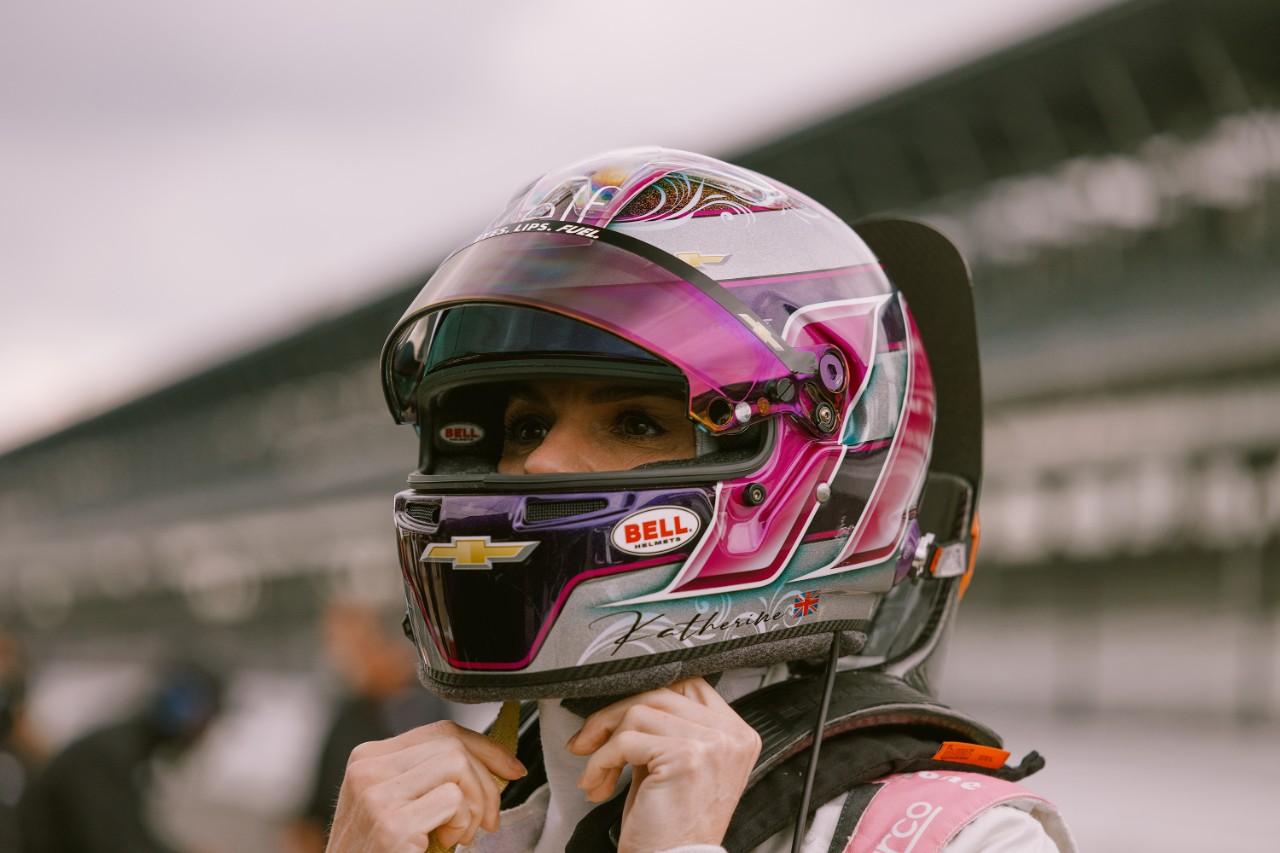
“The part that you have to think about consciously is things like pit stops and the rules around caution laps – what you have to do when you’re not out lapping on the track,” Legge says. “For me, driving the race car happens more instinctively.”
Being the first woman to attempt The Double, Legge feels some responsibility to young racers.
“I have always said that I just want to be the best racing driver I can be. Being female is irrelevant,” she says. “But I will say, I think it has relevance to the next generation. You never set out to be a role model or anything, but you know your position carries some responsibility, and it would be remiss of you not to realize that.”
GM has been an ideal partner in that regard. “They’re just putting the best driver in the car, or the best person in a particular role, regardless of what that person looks like,” Legge says. “It’s very refreshing.”