For Regina Carto and her team, building safer vehicles is a heartfelt mission
2026-04-02
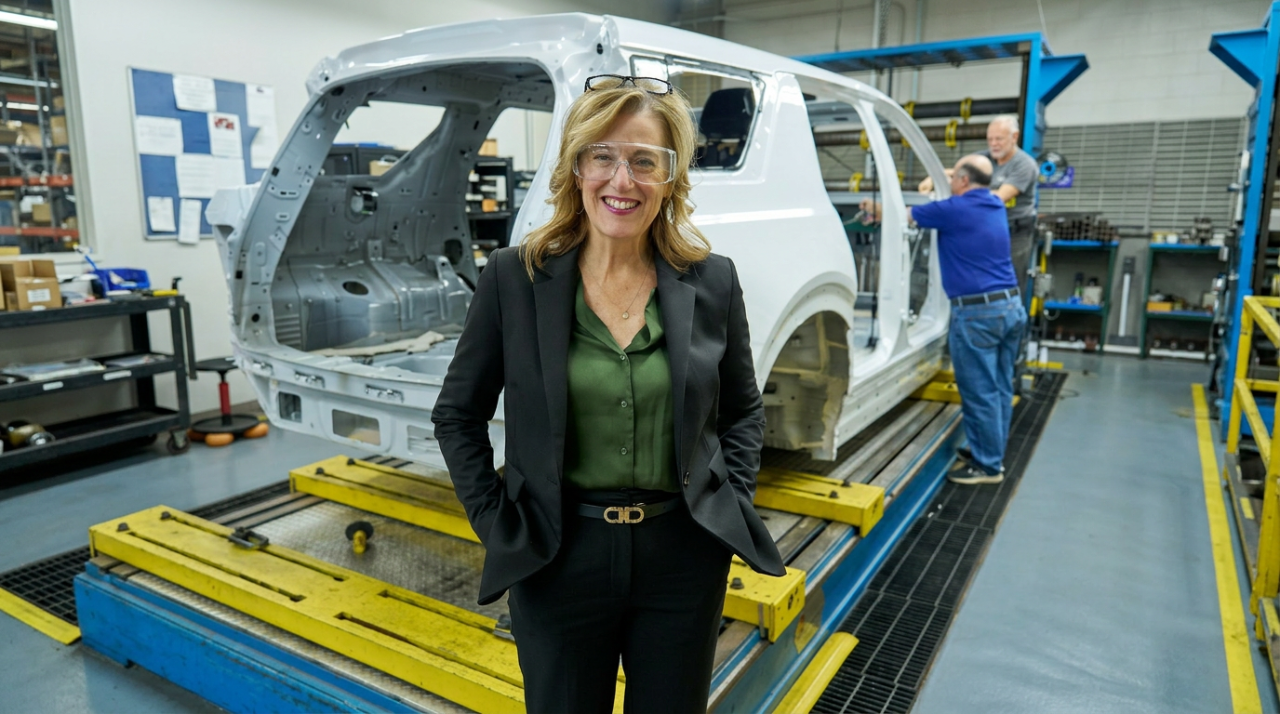
Regina Carto, GM’s Vice President of Global Product Safety, Systems and Certification , has one of the most fascinating jobs in the world. She leads a team of engineers who are totally passionate about and committed to automotive safety.
She also helps further a long tradition of innovation in automotive safety. General Motors was, after all, the first automaker to ever attempt crash barrier testing, all the way back in 1934. It was also the automaker that pioneered the crash test dummy family that remains the industry standard to this day.
To talk to Carto is to fully understand what “vehicle safety” means. So, that's exactly what we did.
As GM’s Global Product Safety leader, what about your role do you find inspirational?
What I lean on most often, because they’re so powerful, are the letters we get from customers. We get letters often from customers who’ve survived a car crash that could’ve had a very different outcome. They’re very heartfelt.
When we share those with the team, that’s where the real emotion comes out. There are tears shed. You feel the heart and soul and effort they put into their craft, how committed they are to getting better outcomes for everybody. What keeps them motivated is the fact that crashes and injuries still occur. Their work is never done.
GM has a long history of automotive safety innovation. How does that legacy shape the work the company does today?
There’s tremendous pride for the things we have done to innovate for safety. GM has been the first for a lot of important safety innovations. When you consider the way the team approaches things now, the culture is one of curiosity and drive. They’re driven to learn and understand all they can.
When you spend enough time with these engineers, you see the delight on their faces when they solve problems. They’re intently focused on fractions of millimeters, fractions of seconds.
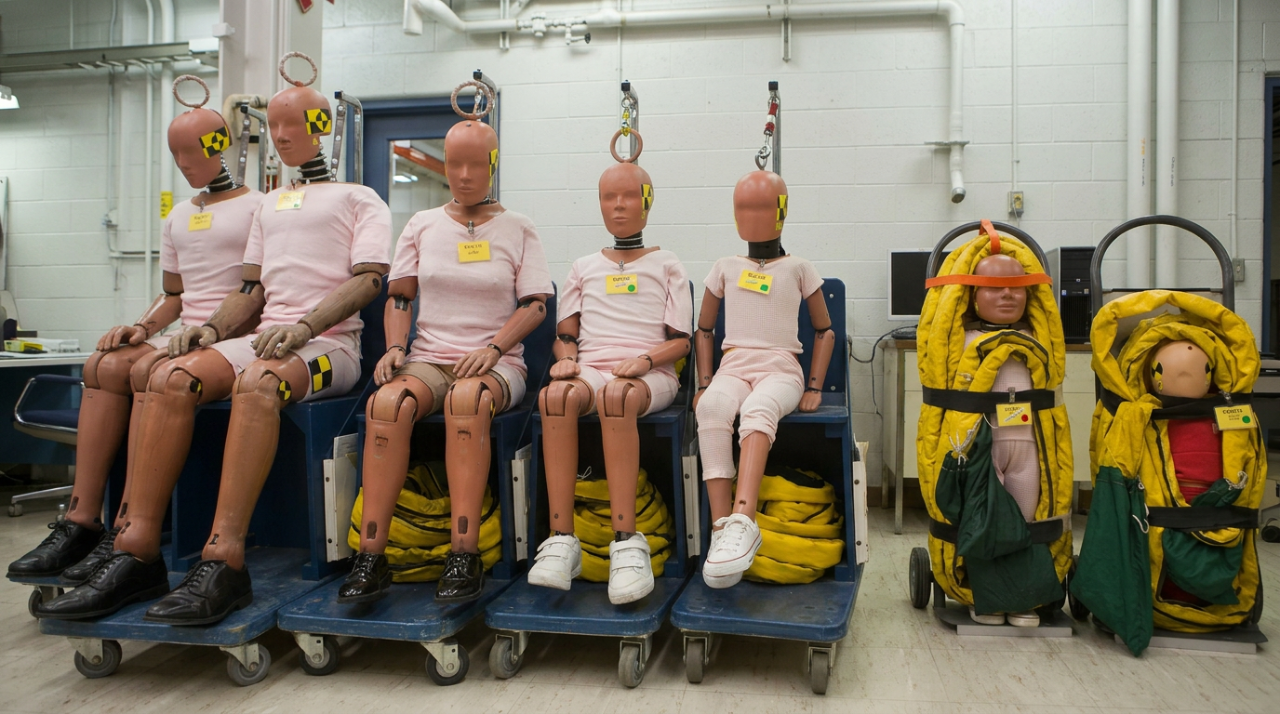
Caption: The current crash-test dummy “family.”
When talking about “vehicle safety,” it’s easy to think just of crash performance, but your role and your team’s role encompass a lot more than that, right?
Correct. We’re not just focused on what happens in a crash – we’re focused on preventing crashes, too, with our advanced driver assistance and safety features that are specifically designed to help drivers prevent crashes altogether or to mitigate the severity of a crash. We’re very proud that a package of key safety and driver assistance features come standard on six U.S. vehicles starting at or under $30,000.
We’re also focused on changing driver behavior with features like Buckle to Drive and our Rear Seat Reminder that uses a simple algorithm to prompt the driver to look in the rear seat under some circumstances when rear door use is detected.
We also collaborate a lot with the user interface teams. Where do we put alerts when you’re getting too close to a vehicle ahead, for example?
To do this well, you have to create a culture where people value safety, where people speak up when things don’t look right. Valuing diverse opinions, drawing out conflicts and resolving them is key.
It seems that much of the work is around trying to create the best possible outcomes for everybody. How do you accommodate the fact that humans come in all shapes and sizes?
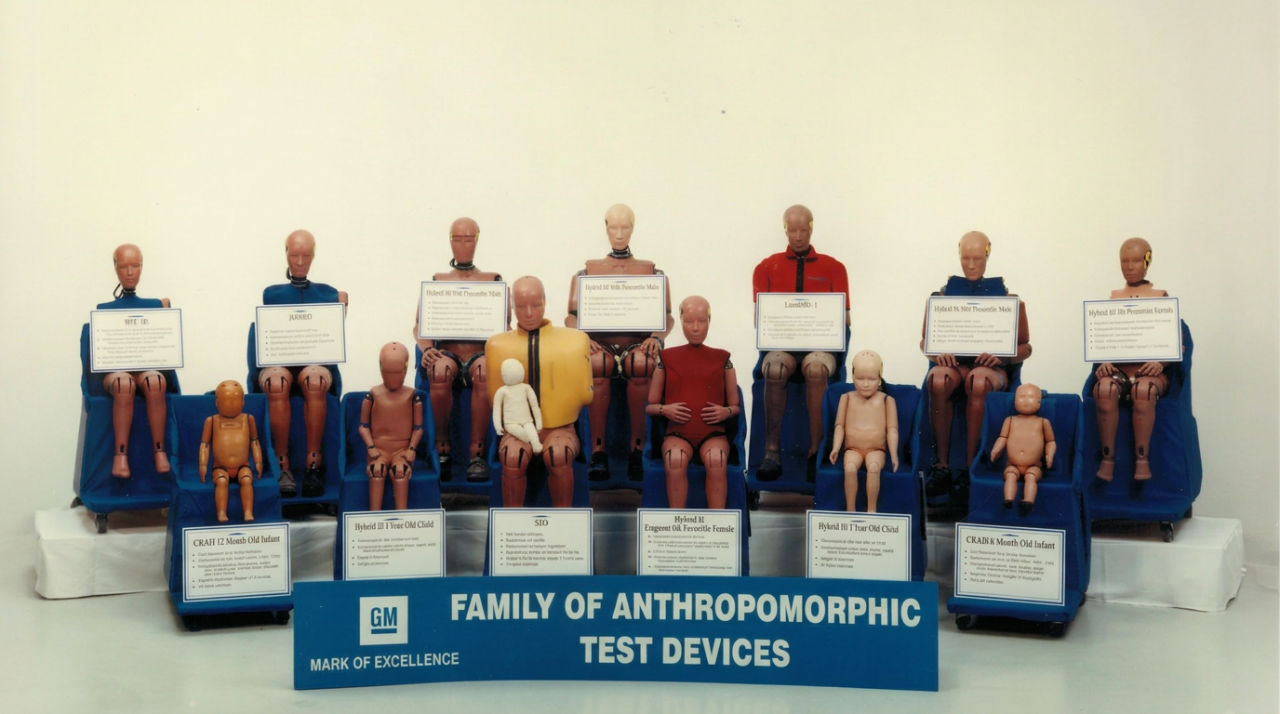
In the early 1970s, we created the first standardized crash-test dummies. This work led to a family of dummies – which now encompasses a newborn baby to a large 95th-percentile male, and sizes in between – that remains the industry standard to this day. In the 1980s, we began using the first small female crash test dummy representing a fifth-percentile female in the 1980s, decades ahead of federal regulations. We also created an abdominal insert to help us research restraint system performance by simulating pregnant women with babies in utero.
Decades of testing with diverse dummies, including female and child dummies, are associated with reduced fatalities and injuries for all occupant sizes, including women.
Caption: A 1980s photo of GM’s crash-test dummy “family.”
How important is computer simulation to your team’s work?
We have developed models that are driving design, but we also use the data from physical testing to inform our virtual testing. We leverage virtual tests to design and assess our new vehicles for different occupant sizes, and a broad range of crash conditions.
Using virtual testing has benefits around speeding up development but also allows us to study variables from the real world that cannot be comprehended with individual crash tests. When you run a physical test, for example, it’s one and done – you may or may not see how varying the test in small ways can change the results. With our virtual variation analysis, we can quickly see how changing those real-world variables affects the results, supporting robust designs.
I find it fascinating that a lot of customers may never see your team’s work in action. Hopefully, they’ll never be involved in a crash.
Nobody wants to experience a crash. You don't get into the car and think “I’m going to have a crash today,” but I don’t know anyone who hasn’t experienced a car crash firsthand or with someone they love. Customers should have confidence and peace of mind knowing the people who designed and manufactured their vehicle take their safety charge seriously.
In order for the vehicle to be safe, we have to collaborate with designers and engineers to architect the requirements up front, the design, analysis, integration and manufacturing quality all have to come together in a culture that really cares about doing the right thing for customers
Regina Carto, GM’s Vice President of Global Product Safety, Systems and Certification, has one of the most fascinating jobs in the world. She leads a team of engineers who are totally passionate about and committed to automotive safety.
She also helps further a long tradition of innovation in automotive safety. General Motors was, after all, the first automaker to ever attempt crash barrier testing, all the way back in 1934. It was also the automaker that pioneered the crash test dummy family that remains the industry standard to this day.
To talk to Carto is to fully understand what “vehicle safety” means. So, that's exactly what we did.
As GM’s Global Product Safety leader, what about your role do you find inspirational?
What I lean on most often, because they’re so powerful, are the letters we get from customers. We get letters often from customers who’ve survived a car crash that could’ve had a very different outcome. They’re very heartfelt.
When we share those with the team, that’s where the real emotion comes out. There are tears shed. You feel the heart and soul and effort they put into their craft, how committed they are to getting better outcomes for everybody. What keeps them motivated is the fact that crashes and injuries still occur. Their work is never done.
GM has a long history of automotive safety innovation. How does that legacy shape the work the company does today?
There’s tremendous pride for the things we have done to innovate for safety. GM has been the first for a lot of important safety innovations. When you consider the way the team approaches things now, the culture is one of curiosity and drive. They’re driven to learn and understand all they can.
When you spend enough time with these engineers, you see the delight on their faces when they solve problems. They’re intently focused on fractions of millimeters, fractions of seconds.
GM's current crash test dummy "family."
When talking about “vehicle safety,” it’s easy to think just of crash performance, but your role and your team’s role encompass a lot more than that, right?
Correct. We’re not just focused on what happens in a crash – we’re focused on preventing crashes, too, with our advanced driver assistance and safety features1 that are specifically designed to help drivers prevent crashes altogether or to mitigate the severity of a crash. We’re very proud that a package of key safety and driver assistance features come standard on six U.S. vehicles starting at or under $30,000.
We’re also focused on changing driver behavior with features like Buckle to Drive and our Rear Seat Reminder2 that uses a simple algorithm to prompt the driver to look in the rear seat under some circumstances when rear door use is detected.
We also collaborate a lot with the user interface teams. Where do we put alerts when you’re getting too close to a vehicle ahead, for example?
To do this well, you have to create a culture where people value safety, where people speak up when things don’t look right. Valuing diverse opinions, drawing out conflicts and resolving them is key.
It seems that much of the work is around trying to create the best possible outcomes for everybody. How do you accommodate the fact that humans come in all shapes and sizes?
In the early 1970s, we created the first standardized crash-test dummies. This work led to a family of dummies – which now encompasses a newborn baby to a large 95th-percentile male, and sizes in between – that remains the industry standard to this day. In the 1980s, we began using the first crash test dummy representing a fifth-percentile female, decades ahead of federal regulations. We also created an abdominal insert to help us research restraint system performance by simulating pregnant women with babies in utero.
Decades of testing with diverse dummies, including female and child dummies, are associated with reduced fatalities and injuries for all occupant sizes, including women.
A 1980s photo of GM's crash test dummy "family."
How important is computer simulation to your team’s work?
We have developed models that are driving design, but we also use the data from physical testing to inform our virtual testing. We leverage virtual tests to design and assess our new vehicles for different occupant sizes, and a broad range of crash conditions.
Using virtual testing has benefits around speeding up development but also allows us to study variables from the real world that cannot be comprehended with individual crash tests. When you run a physical test, for example, it’s one and done – you may or may not see how varying the test in small ways can change the results. With our virtual variation analysis, we can quickly see how changing those real-world variables affects the results, supporting robust designs.
I find it fascinating that a lot of customers may never see your team’s work in action. Hopefully, they’ll never be involved in a crash.
Nobody wants to experience a crash. You don't get into the car and think “I’m going to have a crash today,” but I don’t know anyone who hasn’t experienced a car crash firsthand or with someone they love. Customers should have confidence and peace of mind knowing the people who designed and manufactured their vehicle take their safety charge seriously.
In order for the vehicle to be safe, we have to collaborate with designers and engineers to architect the requirements up front, the design, analysis, integration and manufacturing quality all have to come together in a culture that really cares about doing the right thing for customers.
1 Safety or driver assistance features are no substitute for the driver’s responsibility to
operate the vehicle in a safe manner. The driver should remain attentive to traffic,
surroundings, and road conditions at all times. Visibility, weather, and road conditions may
affect feature performance. Read the vehicle’s owner’s manual for more important feature
limitations and information.
2 Does not detect people or items. Always check rear seat before exiting.